How a Real Time Event Pipeline Drives Action


on this page ▾
A user reaches the final checkout step, hesitates, and leaves. Your funnel shows the drop. Session replay may show a payment error. Your CRM has an email address, support has a ticket, and engineering has a release waiting to ship. The problem is not a lack of data. It is that each team is looking at a different version of the same person.
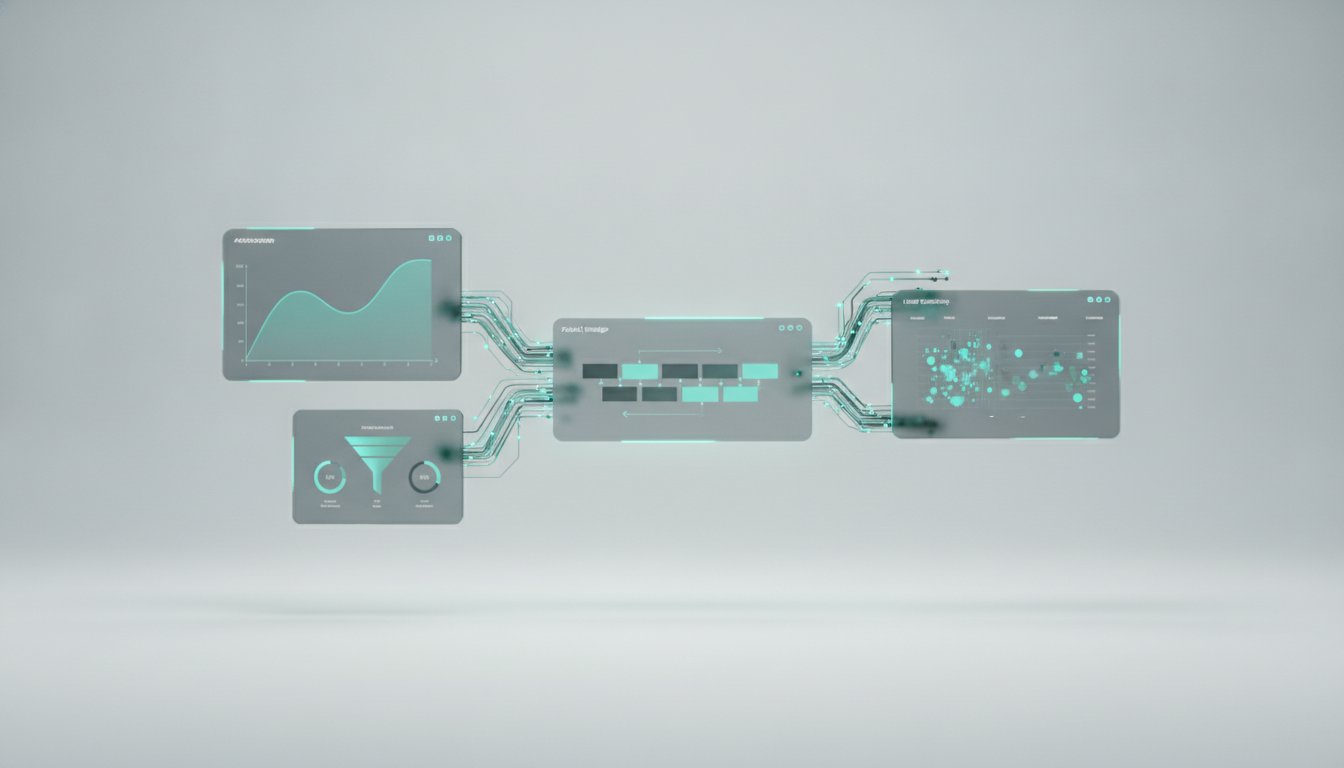
A real time event pipeline fixes that disconnect when it is designed as more than a stream of tracking calls. It becomes the operating layer that connects behavior to identity, identity to context, and context to an action a team can take now. Find the leak, see why it happened, reach the right people, and safely test the fix without exporting a CSV or rebuilding an audience in another tool.
What a real time event pipeline should do
At its simplest, an event pipeline collects product signals such as `page_viewed`, `checkout_started`, `payment_failed`, and `subscription_canceled`. In a useful system, those events are available immediately to analytics, replay, messaging, support, experimentation, and feature management.
The distinction matters. A warehouse-oriented pipeline can be excellent for reporting, finance, and long-range modeling. But if a product manager finds a 22% drop between trial creation and first project setup, waiting for a nightly sync is too slow. The cohort needs to exist while those users are still active. The behavioral timeline needs to be visible before a support agent responds. A feature flag needs to be able to protect the next release before the issue affects everyone.
Real time does not mean every dashboard tile must update to the millisecond. It means the systems that need to respond to a user action receive a dependable event and the current customer context fast enough for the decision at hand. An abandoned-cart reminder may tolerate a few minutes. Blocking a broken checkout flow or disabling a faulty release cannot.
Why fragmented stacks create conflicting answers
Most teams do not start with a bad architecture. They add tools as needs emerge: analytics for funnels, replay for qualitative research, a CRM for lifecycle messages, support software for conversations, and feature flags for releases. Each tool asks for its own SDK, identity setup, event taxonomy, and user profile.
Soon, `user_id` in one product does not match the contact record in another. Anonymous activity disappears at sign-up. The event named `plan_selected` has different properties across two destinations. A growth team exports a funnel cohort, only to find that it includes users who already upgraded because the export was stale. Engineering then has to explain why the numbers do not match.
That is not an analytics problem. It is a data continuity problem. Every copy, sync, and separate identity graph creates another opportunity for records to drift. Teams spend time reconciling tools instead of improving the experience.
A single pipeline does not remove the need for clear ownership or instrumentation discipline. It does remove unnecessary handoffs. There should be one verified identity and event history for every person, whether they are anonymous, logged in, speaking with support, or returning through a campaign.
Build the pipeline around verified identity
Identity is where event pipelines either become useful or quietly fail. A browser-generated anonymous ID is valuable because it captures behavior before registration. But it must be linked correctly when the person authenticates. If that merge is unreliable, the most relevant part of the journey - the path that led to conversion or abandonment - is missing from the customer record.
Use a stable application-level identifier for known users, and verify it server-side where appropriate. Signed JWT-backed identity helps prevent clients from impersonating another account or attaching events to arbitrary user IDs. Server SDKs also matter for events that should come from trusted backend state, such as invoice payment, subscription renewal, permission changes, or fulfillment status.
The goal is not to track everything. The goal is to preserve a trustworthy timeline: what the person did, what they saw, what changed in their account, what messages they received, and which product variant they experienced. Privacy and access controls belong here too. Collect the fields required to make a decision, avoid sending sensitive values by default, and set retention and consent rules before data spreads across five vendors.
Define events as business facts, not interface noise
Good events describe meaningful transitions in a customer journey. `workspace_created` is more useful than a generic button-click event when activation depends on creating a workspace. `invite_sent` may be a better activation signal than `onboarding_completed` if teams that invite collaborators retain at a higher rate.
Each event needs a consistent name, timestamp, identity, and a small set of properties that explain the decision. For a checkout failure, that might include plan, currency, payment-provider response category, platform, and experiment variant. Avoid putting entire payloads into every event. Oversized, inconsistent properties make analysis slower and governance harder.
Autocapture can help teams investigate unexpected behavior and reduce blind spots during early implementation. It should complement intentional event design, not replace it. Critical conversion and revenue events deserve explicit instrumentation and server-side confirmation.
Turn the same signal into an immediate response
The value of a real time event pipeline is measured after a team sees the chart. A funnel should not end as a report. It should become an audience without rebuilding anything.
For example, a product team sees that mobile users who hit a validation error during account setup are abandoning at twice the normal rate. From the same cohort, they can inspect sessions to confirm the confusing form state. Support can see the affected timeline when those users write in. Growth can send an in-app prompt to users still stuck in the flow. Engineering can roll out a corrected validation experience behind a flag, starting with 10% of traffic and keeping a kill switch ready.
That workflow is faster because it uses the same event definitions, audience logic, and identity record at every step. There are no dashboards to rebuild, no weekly export to clean, and no argument about whether the campaign audience matches the analyzed cohort.
Kilden is built around this model: measure behavior, understand the cause, act on the affected audience, and test the product change with release controls in the same system. The point is not to put more features under one logo. It is to stop stitching five tools together around data that should have stayed connected.
Implement a pipeline that teams can trust
Start with the journeys where delay costs real money or retention. For many SaaS products, that means sign-up to activation, trial to paid conversion, failed payment recovery, and early churn signals. For ecommerce, it may be product discovery, cart creation, checkout, and post-purchase support. Instrument those paths first rather than launching with hundreds of low-value events.
Then establish a compact event contract. Decide which events are client-side, which require server confirmation, which properties are allowed, and who owns changes. A two-minute npm install is useful, but the implementation is only complete when the identity transition from anonymous visitor to authenticated user is tested and the key server events arrive correctly.
Run a simple validation exercise before building dashboards. Create a test account, complete an anonymous journey, sign in, trigger an important event, contact support, and enter a flagged experience. Confirm that every state appears on one timeline. If the journey splits into multiple people, fix identity before asking growth or support to rely on the data.
Finally, create operational rules for response. Define what conversion decline triggers investigation, which events make someone eligible for a message, and who can change a production flag. Real-time availability is only useful when teams know what they are authorized to do with it. Product can own funnel definitions, growth can own campaign copy and frequency limits, support can own escalation cues, and engineering can own rollout guardrails.
The trade-offs to make deliberately
Centralizing event flow creates leverage, but it also raises the standard for the pipeline. If the data model is vague, every connected capability inherits the ambiguity. If identity verification is weak, the blast radius is larger than it would be in a disconnected tool. Treat event naming, permissions, consent, and schema changes as product infrastructure.
There is also a real build-versus-buy question. A custom stack may make sense when a company has unusual data residency needs, a mature platform team, and dedicated resources to operate identity resolution, audience computation, messaging delivery, replay, and experimentation. Most product teams do not need a new internal data product. They need reliable answers and the ability to act before the customer leaves.
Start with one conversion leak that matters. Make sure every team can see the same person behind it. Then use that shared history to make a change while the signal is still fresh. That is where a pipeline stops being plumbing and starts producing growth.