Best Feature Flag Tools in 2026: Stop Toggling in the Dark

on this page ▾
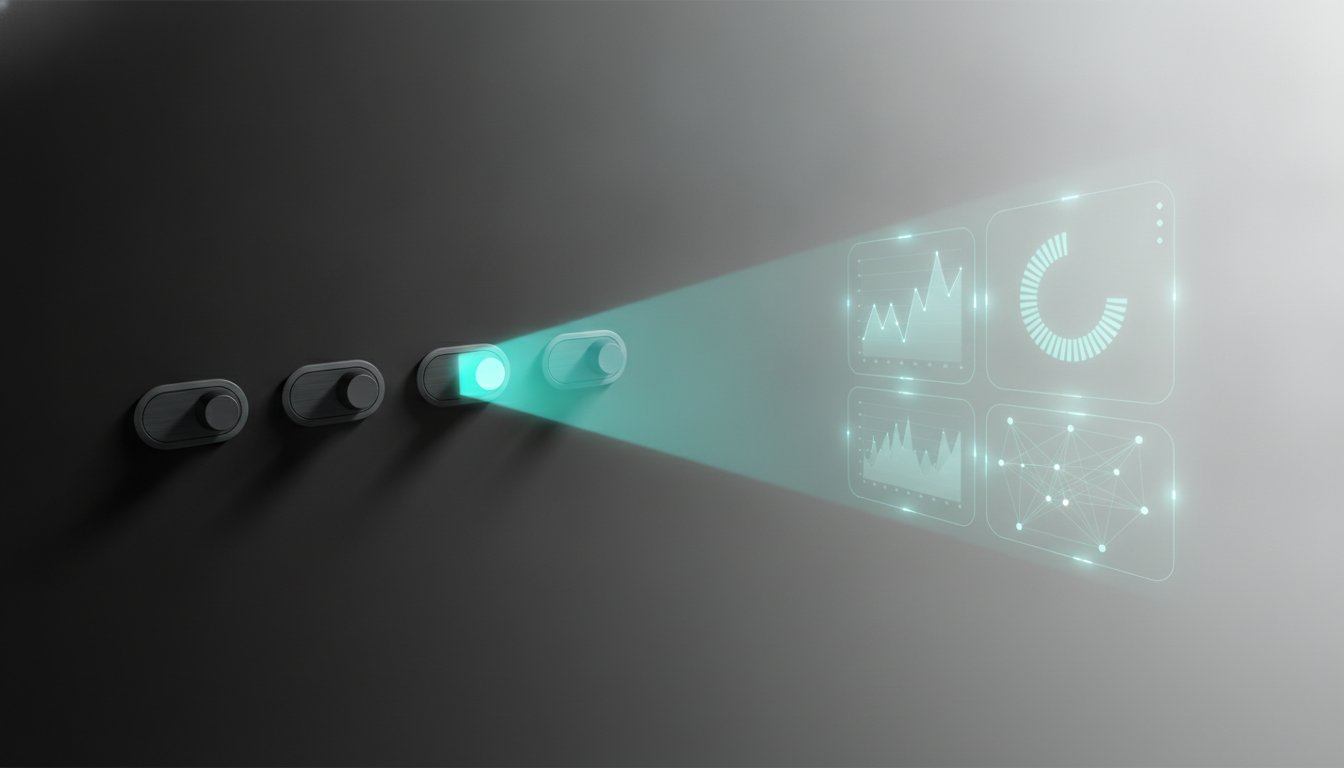
A feature flag tool should be a precision instrument, not a hidden tax on your headcount. Most platforms today function like expensive light switches. They let you toggle code, then leave you in the dark while charging you for every engineer on your payroll. It's a fragmented, inefficient way to build software. You shouldn't have to cross-reference three different analytics tools just to confirm a new feature didn't break your checkout flow.
We agree that the status quo is broken. You deserve a unified view of how your code impacts your users without the friction of complex data engineering or per-seat licensing. This article identifies the top feature flag tools in 2026 that actually bridge the gap between deployment and insight. We'll examine how these platforms handle instant rollbacks and transparent pricing so you can stop guessing and start shipping with confidence.
Key Takeaways
- Stop toggling in the dark. Fragmented systems create technical debt. Learn to unify deployment with real-time measurement.
- Identify core requirements for a modern feature flag tool. Focus on real-time observability and granular user segmentation.
- Compare the 2026 landscape. Evaluate enterprise heavyweights against CI/CD specialists to find your ideal fit.
- Audit your technical debt. Use our two-step strategy to kill "zombie" flags and define metrics before you ship.
- Eliminate the per-seat tax. Integrate flags with session replays and analytics for a single source of truth.
Table of Contents
- The Hidden Cost of Fragmented Feature Flag Tools
- What Defines a Modern Feature Management Platform?
- Comparing the Top Feature Flag Tools for 2026
- Strategic Implementation: Moving from Toggles to Experimentation
- Kilden: The Unified Alternative to Bloated Feature Flag Silos
The Hidden Cost of Fragmented Feature Flag Tools
Deployment is not a release. Many teams still treat them as the same event, which is a mistake that leads to unnecessary risk. A modern feature flag tool allows you to decouple these two actions. You push code to production when it's ready, but you only expose it to users when the business is ready. This separation of concerns is the foundation of modern delivery. However, the industry has hit a wall.
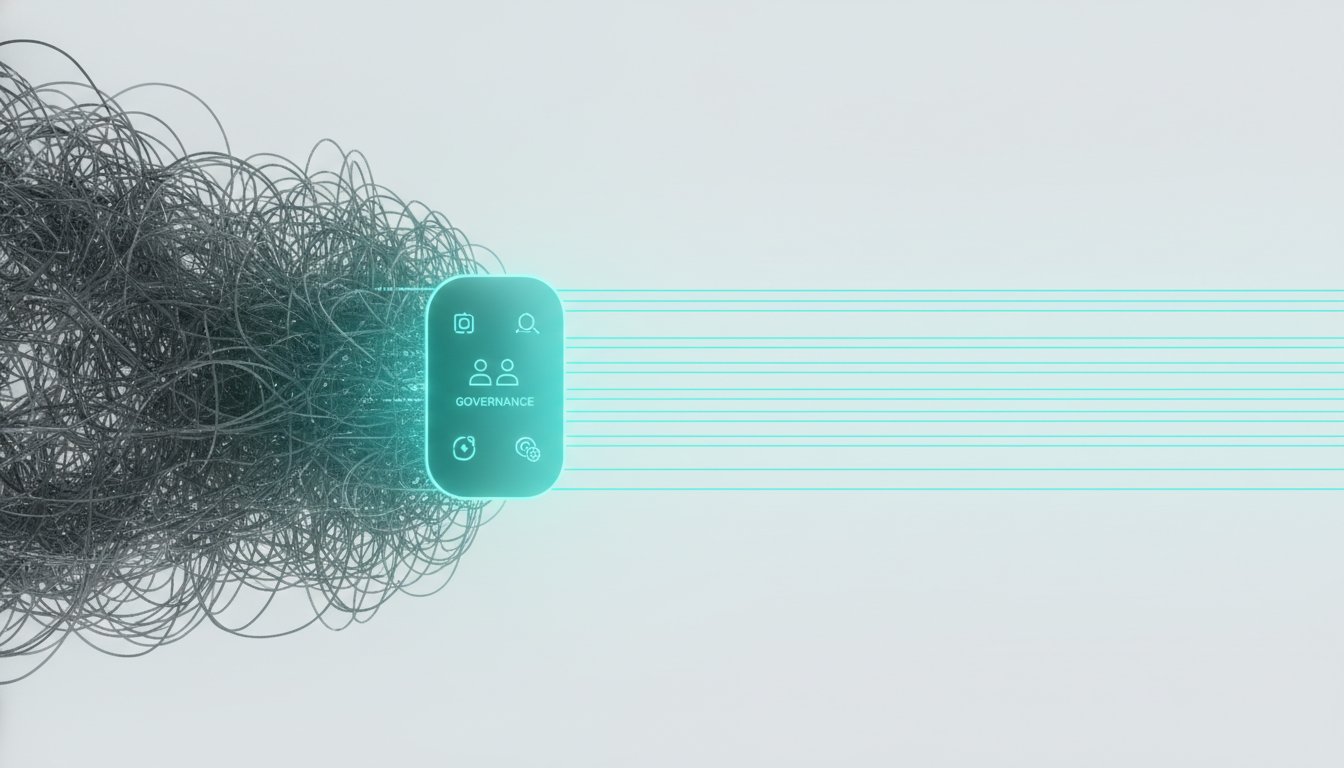
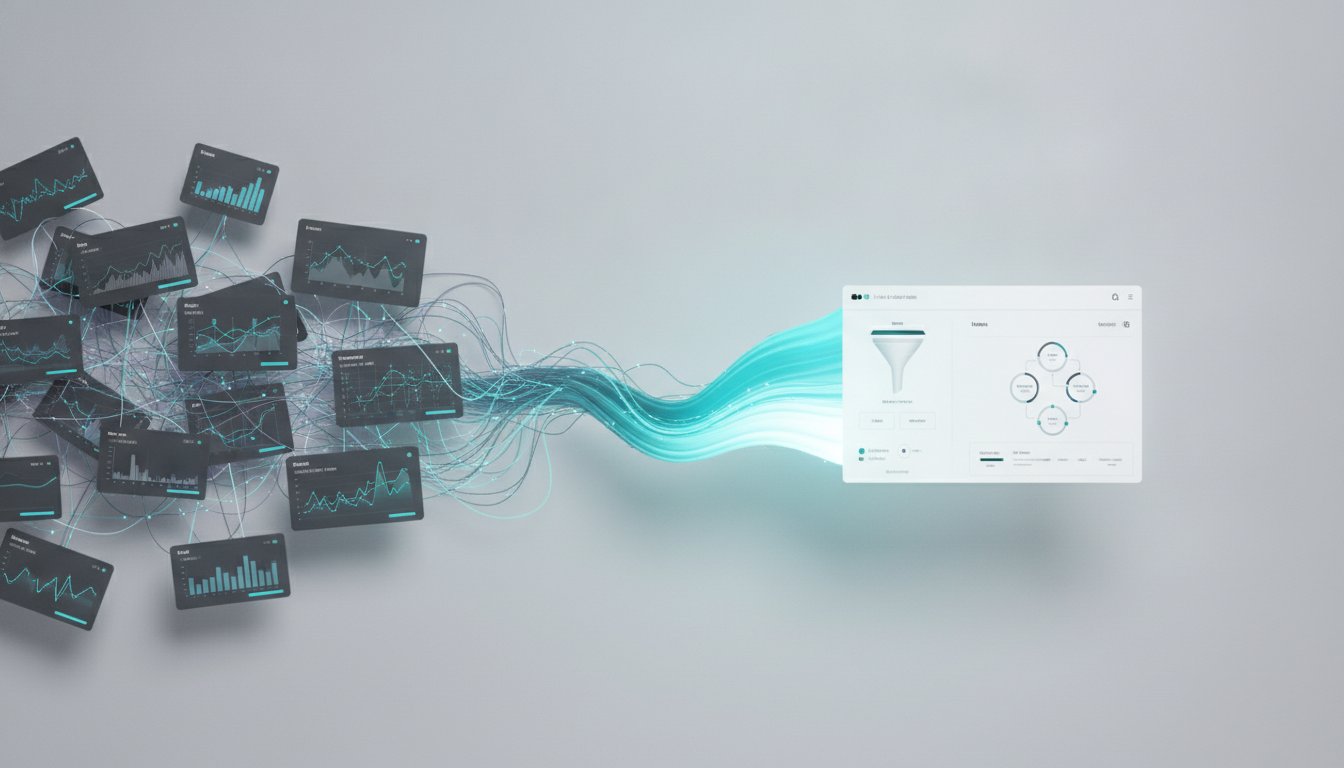
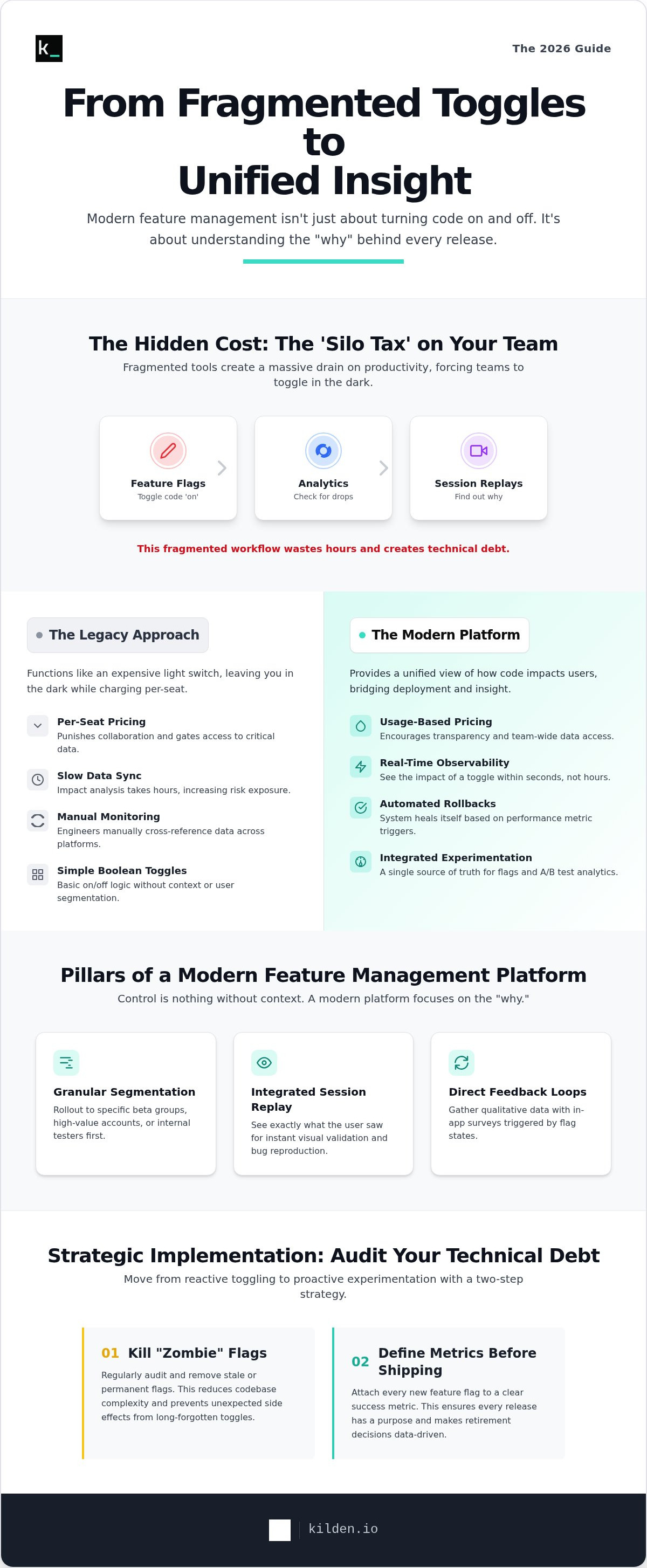
The problem is fragmentation. You toggle a feature "on" in one dashboard. You then jump to a separate analytics platform to see if conversion rates dropped. If something looks wrong, you open a third tool for session replays to find out why. This is the "Silo Tax." It's a massive drain on productivity. Engineers waste hours reconciling timestamps between disparate platforms just to prove a feature works. In 2026, toggling in the dark is no longer acceptable. You need a unified view of how every flag affects user behavior in real time. A fragmented stack is a recipe for technical debt and missed insights.
Beyond the Simple Toggle
Basic boolean flags are a commodity. Any junior developer can wrap a block of code in an if/else statement. Modern SaaS demands more. The conversation has shifted from "did the site crash?" to "did this feature actually drive growth?" You need to know if a new UI element increased engagement or if a backend change slowed down the checkout process for specific user segments. Feature management is the holistic lifecycle of a feature, from initial canary release to full rollout and eventual retirement. It's not just a one-time switch. It's a continuous feedback loop that requires integrated data to be effective.
The Per-Seat Pricing Trap
Traditional licensing models are broken. Most vendors charge you based on how many people have access to the dashboard. This creates a perverse incentive to gatekeep data. Product managers and engineers end up sharing logins to save money. Or worse, they work without the information they need. High-performing teams shouldn't be punished for being collaborative. Usage-based or flat-rate models are the only logical path forward. Everyone on your team deserves access to the data that proves their work is successful. Transparency should be a core value, not a luxury you pay extra for.
What Defines a Modern Feature Management Platform?
Control is nothing without context. A legacy feature flag tool focuses on the "if/else" logic. A modern platform focuses on the "why." You need real-time observability. Waiting hours for a data sync is a liability. You should see the impact of a toggle within seconds. If latency climbs or conversion drops, you need to know immediately. Speed is the difference between a minor glitch and a headline-grabbing outage.
Targeting must move beyond simple on/off states. Modern systems allow for hyper-granular segmentation. You can rollout to specific beta groups, high-value accounts, or internal testers first. If something breaks, the platform should handle it. Automated rollbacks use performance metrics to trigger a kill-switch. The system heals itself before your support team even gets a ticket. This is the standard for engineering excellence in 2026.
Don't ignore the human element. Modern management integrates feedback loops directly into the rollout. You can trigger in-app surveys or banners based on specific flag states. This allows you to gather qualitative data while the feature is fresh. You aren't just looking at abstract charts. You're talking to users. If you want to see how this looks in a unified product platform, the logic is simple: keep your tools in one place to avoid data drift.
The Role of Session Replay in Feature Validation
Seeing is believing. Logs tell you that a user clicked a button, but they don't show the three seconds of hesitation or the frustrated mouse wiggles. Connecting flags directly to session recordings allows for instant bug reproduction. You see exactly what the user saw. This visual validation reduces the need for expensive, high-maintenance QA environments by letting you monitor real-world behavior safely and accurately.
Experimentation and A/B Testing
Every feature rollout is a potential experiment. You shouldn't need a separate data science team to run a simple A/B test. A modern feature flag tool provides a single source of truth for both flags and analytics. While warehouse-native solutions are popular for long-term storage, they are often too slow for agile product teams. You need high-velocity data to make decisions in the moment. Decisions should be based on live evidence, not historical reports.
Comparing the Top Feature Flag Tools for 2026
Choosing a feature flag tool used to be a simple binary choice. Today, the market is crowded with specialized vendors. As noted by pioneering software architect Martin Fowler, the complexity of these systems has grown alongside our deployment needs. You need to know which tool fits your specific workflow without overpaying for features you won't use.
- LaunchDarkly: The enterprise heavyweight. It offers the most robust governance and permissioning features. However, it comes with a premium price tag. For 2026, their Foundation plan starts at $10 per service connection per month when billed annually. It is built for massive scale but can be overkill for lean teams.
- Harness: The best choice for teams deeply integrated into Harness for CI/CD. It treats feature flags as a natural extension of the deployment pipeline. It's powerful, but it often requires a commitment to the broader Harness ecosystem.
- Statsig: Built for teams that prioritize data over everything else. It focuses heavily on the statistical significance of every rollout. If you are running 50 concurrent A/B tests, this is a strong contender.
- Unleash: The go-to for open-source advocates. It offers a self-hosted version for teams with strict security requirements. Their cloud-hosted pay-as-you-go model is priced at $75 per seat per month, which can scale quickly.
- Kilden: The unified alternative. Kilden eliminates the "Silo Tax" by integrating flags, analytics, and session replays into one UI. It explicitly avoids per-seat licensing, making it the most cost-effective choice for collaborative growth-stage teams.
Enterprise vs. Growth-Stage Needs
Enterprise teams often prioritize governance. They need Role-Based Access Control (RBAC) and detailed audit trails to satisfy compliance. Growth-stage teams prioritize velocity. They need a tool that doesn't get in the way. Don't let complex governance requirements slow your deployment speed. Choose a tool that balances control with the need to ship code fast. Maintaining complex third-party SDKs is a hidden engineering cost you must account for.
The Developer Experience (DX) Factor
A tool is only as good as its SDK. You need low latency and local evaluation capabilities to ensure your app stays fast. Set up should be measured in minutes, not days. From "Hello World" to a production rollout, the friction should be minimal. Product managers also need a "no-code" interface to manage toggles without bothering an engineer. If a PM has to wait for a sprint cycle to flip a switch, your tool is failing you.
Strategic Implementation: Moving from Toggles to Experimentation
A feature flag tool is a safety net, but it should also be a growth engine. Many teams install the software and then stop. They use it for emergency rollbacks but miss the opportunity for experimentation. To move from basic toggles to a mature experimentation culture, you need a repeatable framework. Stop guessing. Start measuring.
Step 1: Audit your technical debt. Zombie flags are toggles left in your codebase after a feature is 100% rolled out. They are liabilities. They clutter your logic and create "dead" paths that can cause unexpected behavior. Conduct a monthly audit. If a flag is no longer serving a purpose, kill it. Logic that stays in the code forever isn't a feature; it's debt.
Step 2: Define success before the toggle. Never release a feature without a core metric. Are you looking for a 5% increase in sign-ups? A reduction in latency? If you don't know what you're measuring, you're just toggling in the dark. Use a unified feature management platform to link flags directly to these outcomes so you can see the truth immediately.
Step 3: Use progressive rollouts. Stop the "big bang" release. Implement canary releases. Start with 1% of your traffic. Monitor the data. If the metrics stay healthy, move to 10%, then 50%. This minimizes the blast radius of any potential failure. It gives you the confidence to ship on a Friday without the fear of a weekend outage.
Step 4: Automate the cleanup. Code rot is real. Use your feature flag tool to set alerts for stale flags. If a flag hasn't been modified in 30 days, it's likely ready for removal. Automation ensures your codebase stays lean and maintainable. It removes the human error of forgetting to delete old logic.
Managing the Lifecycle of a Flag
Not all flags are created equal. Release flags are short-term. They exist only until a feature is fully deployed. Operational toggles are long-term. They act as kill switches for backend services or third-party integrations. Distinguish between them. Set hard expiration dates for release flags. Engineering builds the logic, but Product should own the rollout schedule. Clear ownership prevents confusion and delays.
Scaling Feature Management Across Teams
Large microservices architectures face the risk of "flag collisions." One team's toggle shouldn't break another team's service. Use strict naming conventions. A format like [service]-[feature]-[type] provides instant clarity. Centralized documentation is mandatory. This structure enables trunk-based development. You can merge code to your main branch constantly without the chaos of long-lived feature branches. It keeps your team fast and your deployments safe.
Kilden: The Unified Alternative to Bloated Feature Flag Silos
The industry has a fragmentation problem. You've seen the "Silo Tax" in action throughout this guide. Most companies force you to integrate three or four different vendors to get a complete view of your product. This fragmentation is inefficient. You waste hours reconciling data between your analytics platform and your feature flag tool. Kilden solves this by unifying flags, session replays, and analytics into a single identity. This isn't just about convenience. It's about truth. When you flip a switch, you see the impact across your entire stack instantly.
Kilden is built for teams that value utility over marketing jargon. We focus on the relief that comes from simplification. Our platform provides a direct path from code deployment to user insight. We've identified the flaws in the current industry standards and built a more logical alternative. Here is how we do it:
- Integrated Identity: Every toggle is linked to a session replay and a specific data point. There is no ambiguity.
- No Per-Seat Tax: We don't punish you for having a large team. Collaboration should be the default.
- Zero Infrastructure Overhead: You don't need a dedicated data engineering team to get insights. The connections are built-in.
- Behavioral Triggers: Use flag states to launch product tours, in-app banners, or surveys. Connect with your users based on what they actually see.
The Kilden Difference: Context is King
When a feature fails, a graph won't tell you why. It only tells you that it happened. Integrated session replay shows you the exact moment of friction. You see the user's struggle. You see the bugs in real-time. Kilden links your A/B tests directly to your product analytics dashboard. There is no data drift. There are no manual exports. This is the lean choice for high-growth SaaS teams. You need to move fast. You shouldn't have to wait for a data sync to make a decision.
Ready to Simplify Your Stack?
Migrating from a fragmented ecosystem is a logical step toward efficiency. A single SDK replaces the bloat of multiple third-party libraries. This improves your app's performance. It simplifies your maintenance. You get a unified growth platform that respects your technical intelligence. Stop paying for tools that keep you in the dark. Choose a feature flag tool that prioritizes clarity and movement. It's time to ship with confidence and see the whole truth.
See how Kilden unifies feature flags and analytics
Ship with Clarity, Not Chaos
Fragmented systems are a liability. They waste time. They obscure the truth. Choosing a feature flag tool shouldn't mean adding another expensive silo to your stack. You've seen the cost of toggling in the dark. It leads to technical debt and missed insights. The path forward is simple. Unify your control and your observation. When you connect flags directly to analytics and session replays, you eliminate the guesswork. You move faster. You build better software.
Complexity is a choice. You can continue juggling multiple vendors, or you can choose a platform built for high-velocity teams. Efficiency happens when everyone has access to the data they need. Start managing features better with Kilden—No per-seat licensing required. Benefit from unified analytics and integrated session replays without the burden of per-seat costs. It's time to stop toggling in the dark and start shipping with total confidence.
Frequently Asked Questions
What is the difference between a feature flag and a feature toggle?
These terms are used interchangeably. A "toggle" refers to the actual mechanism that switches code paths. A "flag" represents the state or the variable itself. In modern development, "feature flag" usually implies a more sophisticated management system that includes targeting, scheduling, and experimentation. Both concepts allow you to change application behavior without performing a new code deployment.
How do feature flag tools impact application performance?
Performance impact is negligible if you use a tool that supports local evaluation. The SDK fetches the flag rules once and evaluates them in-memory. This prevents a network round-trip for every check. Avoid any feature flag tool that requires a remote API call for every toggle, as this will introduce significant latency and degrade the user experience.
Do I really need a dedicated tool, or can I build my own feature flag system?
Building your own system is a trap that leads to long-term technical debt. DIY solutions usually lack audit trails, granular targeting, and real-time observability. You'll eventually spend more engineering hours maintaining a home-grown platform than you would pay for a professional service. Focus your team on your core product and buy a specialized tool for feature management.
How do feature flags work with A/B testing?
Feature flags are the delivery mechanism for A/B testing. You use the flag to assign different versions of a feature to specific user segments. By linking these assignments to your analytics, you can measure which version performs better. A unified platform makes this process automatic, allowing you to turn every rollout into a statistically significant experiment without manual data exports.
What are the security risks of using third-party feature flag platforms?
The main risks involve data privacy and unauthorized access to toggles. Mitigate this by choosing vendors with SOC2 Type II compliance and robust Role-Based Access Control. Use a tool that evaluates flags on your own servers so that sensitive user attributes never leave your infrastructure. This "local evaluation" model ensures that your user data stays private and secure.
Can feature flags be used for permanent configuration management?
No. Feature flags are for lifecycle management, not permanent settings. Using them for long-term configuration creates "flag debt" and makes your codebase harder to maintain. If a setting doesn't need a kill switch or a gradual rollout, use environment variables or a standard configuration file. Reserve flags for features that are in transition or require operational control.
What is "flag debt" and how do I avoid it?
Flag debt is the accumulation of "zombie" code left in your system after a feature is fully released. It clutters your logic and can lead to unexpected behavior. Avoid it by treating every flag as temporary. Set expiration dates for every toggle and use your tool's stale flag reports to identify and remove code that is no longer necessary for your operations.
How do feature flags integrate with my existing CI/CD pipeline?
Feature flags complement CI/CD by decoupling deployment from release. Your pipeline handles the movement of code to production, while the flag controls when users actually see the feature. You can integrate flags via APIs to automate status updates during your build process. This enables safer "dark launches" and canary releases as a standard part of your deployment workflow.