Product Analytics Pricing: The 2026 Guide to Avoiding the Tool Tax

on this page ▾
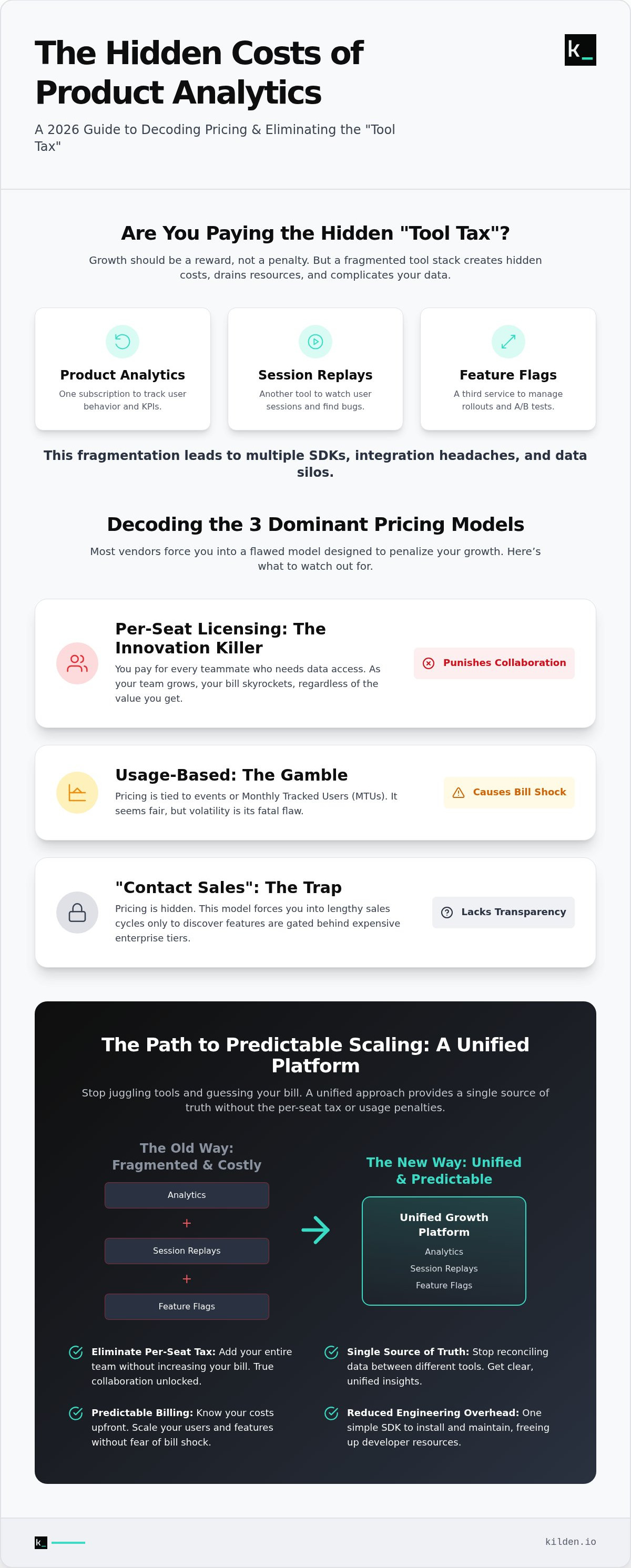
Growth is the goal, yet most vendors treat it like a taxable offense. You scale your team, you add a new product manager, and suddenly your product analytics pricing spikes. This is the "tool tax" in action. It is a system designed to penalize success rather than fuel it. You are likely juggling three different subscriptions just to see what your users are doing. One for analytics, one for session replays, and another for feature flags. It is fragmented. It is expensive. It is exhausting.
We agree that your bill should reflect the value you get, not the number of people on your payroll. You shouldn't have to choose between adding a teammate and staying under budget. This 2026 guide shows you how to decode complex pricing models and eliminate the hidden costs of a fragmented stack. We'll look at why per-seat licensing is a relic of the past. You will discover how a unified toolset provides a single source of truth without the integration headaches. It is time to stop paying for seats and start moving toward total transparency and predictable scaling.
Key Takeaways
- Identify the hidden traps in "Contact Sales" models that lead to unpredictable bill shock as you scale.
- Calculate your real Total Cost of Ownership by auditing "Shadow SaaS" and wasted engineering maintenance hours.
- Compare the three dominant models for product analytics pricing to find the one that prioritizes data over seat counts.
- Stop the "Tool Tax" that kills app performance and drains your developer resources through fragmented SDKs.
- Learn why a unified identity system is the only way to scale analytics and engagement tools affordably in 2026.
Table of Contents
- Why Product Analytics Pricing Feels Like a Shell Game
- Decoding the Three Dominant Pricing Models (and Their Flaws)
- The Hidden Cost of Fragmented Data: The "Tool Tax"
- How to Calculate the Real TCO of Your Analytics Stack
- Kilden: Unified Product Growth Without the Per-Seat Tax
Why Product Analytics Pricing Feels Like a Shell Game
Product analytics pricing has become a shell game. Vendors move the cups around to hide the true cost under layers of platform fees and overage charges. They want you to focus on the shiny dashboard while they quietly tax every event your users trigger. This isn't just a financial burden. It is a strategic one. It forces you to choose between data-driven decisions and your bottom line. The result is a system where the vendor wins when you scale, but you lose on margin. You end up paying more for the same insights just because your user base grew.
The landscape in 2026 is shifting. The "growth at all costs" era is over. Efficiency is the new priority. Teams are realizing that fragmented tools and opaque pricing are a form of technical debt. If a vendor can't tell you what you'll pay six months from now, they aren't a partner; they're a liability. This is why the broad field of Analytics is moving toward utility and straight-talk over bait-and-switch tactics. Modern teams demand clarity before they commit to an integration.
To better understand how different tools approach these models in the current market, watch this breakdown of industry standards:
The "Contact Sales" Trap
When a vendor hides their price, they are signaling that their tool isn't for every team. It is for those with deep pockets and slow processes. For an agile startup or a lean product team, this is a major red flag. You spend days in discovery calls and meetings just to get a quote. Then, you discover that the "must-have" features shown in the demo are gated behind a higher enterprise tier. This isn't just annoying; it's a waste of engineering time and operational budget. You need to know the cost before you commit the code. Modern product development moves too fast for the traditional procurement cycle. If you have to wait weeks for a pricing spreadsheet, you've already lost the momentum needed to outpace your competition.
The Psychological Cost of Complexity
Complexity has a hidden price. It's psychological. When product analytics pricing is unpredictable, teams start "data hoarding" in reverse. They stop tracking events because they fear the next invoice. This fear kills experimentation. If you are afraid to measure a new feature because it might spike your costs, the tool works against your growth. You need firm billing limits and total predictability. Clarity is the foundation of a data-driven culture. It allows your team to focus on the user, not the budget. When everyone knows the costs are capped, they feel empowered to track every interaction. Transparency isn't just a billing preference; it's a requirement for high-velocity teams.
Decoding the Three Dominant Pricing Models (and Their Flaws)
Most vendors force you into one of three buckets. Each has a hidden catch. Choosing the right product analytics pricing model is a high-stakes decision. It dictates how your team interacts with data for years. Comparing these models is the baseline for Calculating Total Cost of Ownership (TCO) across your entire engineering and marketing stack. If you choose wrong, you end up with a bill that grows faster than your revenue.
Per-Seat Licensing: The Innovation Killer
Paying per user is a legacy mistake. It punishes collaboration. If your product manager can't see the data because it costs an extra monthly fee, you've already lost. This model creates data silos. It turns insights into a luxury. The blunt truth is that seat-based pricing is a tax on your company’s curiosity. You shouldn't pay more just because your team is growing. A larger team should mean more experiments, not a bigger invoice. It's an illogical way to run a modern software company.
Usage-Based vs. Flat Rate
Event-based pricing is a measure of volume, not value. It looks fair at first. You only pay for what you use. But usage is volatile. A viral launch or a simple tracking bug can bankrupt your monthly budget in hours. MTU (Monthly Tracked Users) tries to bridge this gap. It's often just a way to hide complexity in tiers. You end up paying for "active" users who might only visit your login page once. It's a middle ground that still feels like a gamble.
Usage-based models make sense in the early stages. They are cheap when you have zero traffic. They hurt when you scale. Your bill becomes a moving target. Predictability vanishes. This is where the Unified Flat Rate emerges as the 2026 winner. One price. All the tools. No seat limits. It's about utility. Most teams eventually realize that standard product analytics pricing models are designed to capture your growth, not support it. They want a piece of your success. We think you should keep it.
Clarity is the only way forward. If you are tired of seat-based restrictions and unpredictable bills, you can access a unified engagement suite that scales with your data, not your payroll. Stop managing licenses and start managing your product. The focus should be on the user experience, not the cost of the next click.
The Hidden Cost of Fragmented Data: The "Tool Tax"
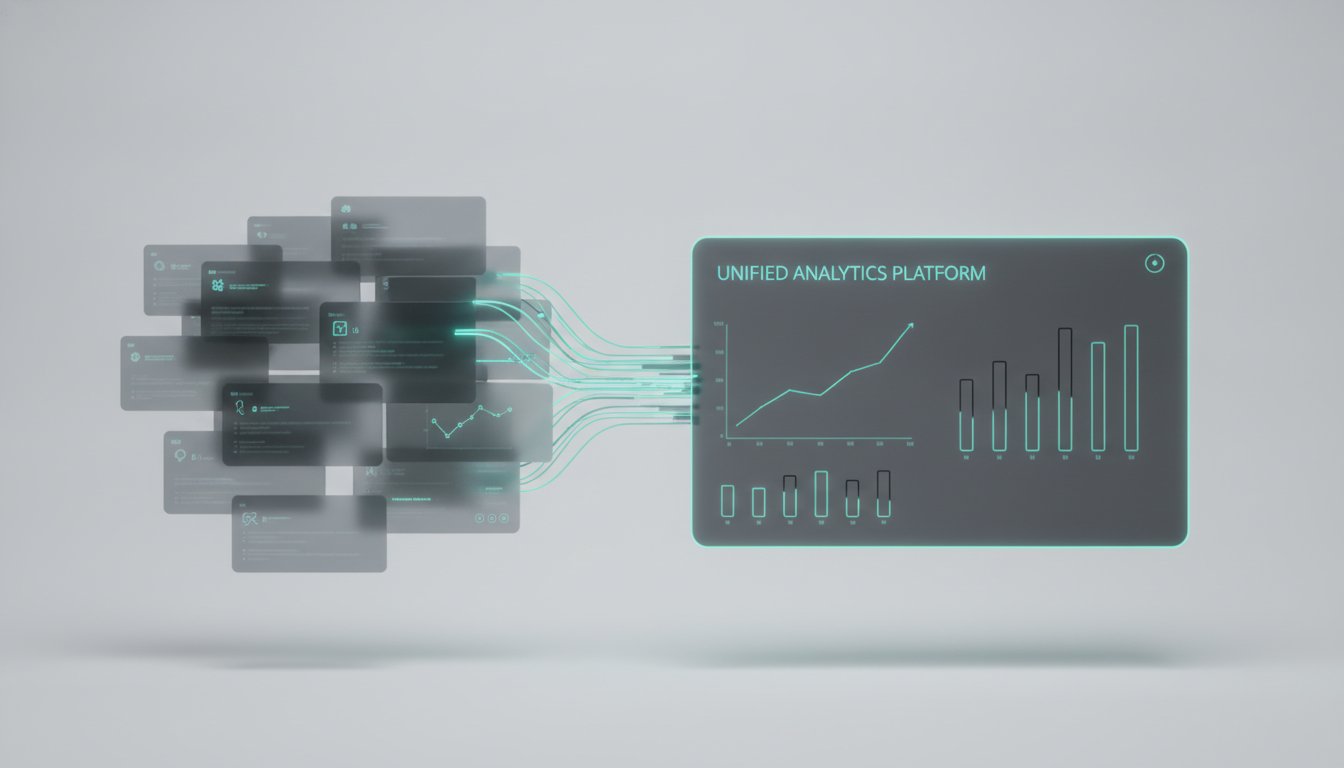
Product analytics pricing is often just the tip of the iceberg. The real cost of your stack is the "Tool Tax." This is the silent killer of product margins. It isn't just the sticker price on your dashboard. It's the cumulative friction of a fragmented stack. Most teams pay for five separate subscriptions. They have one for analytics, one for session replay, one for feature flags, and two more for messaging and surveys. This fragmentation creates a massive overhead. It drains your engineering resources and slows down your product.
The Multi-SDK Performance Penalty
Every tracker you add is a weight on your app. Five SDKs mean five different libraries to load. They mean five separate network requests every time a user clicks a button. This bloat kills conversions. A slow site is a broken site. Beyond performance, there is the maintenance burden. Your developers spend dozens of hours every quarter just updating libraries and fixing broken integrations. It's a waste of talent. One SDK is the only sane way to manage data in 2026. It simplifies your codebase. It protects your site speed. It keeps your app lean and your users happy.
Paying for the Same Data Twice
Fragmented tools lead to redundant billing. You pay for a "User Signed Up" event in your analytics tool. Then you pay for that same event in your messenger to trigger a welcome campaign. You are being billed twice for the same piece of truth. This is inefficient. Most teams lose hundreds of engineering hours every year to "Integration Tax." This is the time spent making tools talk to each other. You shouldn't need a data engineer just to send an in-app banner based on a user's behavior. A unified product analytics and engagement strategy fixes this logic. It uses a shared identity. One user. One event. One cost. Multiple tools.
When you stop paying for separate silos, your budget opens up. You can replace multiple product tools with one platform and see immediate relief. This isn't just about saving 40% on your software bill. It's about reclaiming engineering hours. It's about making your product analytics pricing predictable again. Stop chasing data across five different browser tabs. Bring it into one house. When you bring analytics, session replay, and feature flags into one platform, the tax disappears. Unity is the ultimate efficiency.
How to Calculate the Real TCO of Your Analytics Stack
Most pricing calculators are a lie. They ignore the human element. To find the truth, you must look at the labor behind the dashboard. Product analytics pricing is a function of subscription fees plus engineering hours plus lost opportunity. If you only look at the monthly invoice, you are missing the biggest part of the bill. You need a formula that accounts for the friction of a fragmented stack.
To calculate your real Total Cost of Ownership (TCO), follow these four steps. First, inventory your "Shadow SaaS." This includes every standalone tool for messaging, surveys, and feature flags that has its own login and billing cycle. Second, audit the engineering hours spent on data pipeline maintenance. If your developers spend ten hours a week fixing broken schemas or syncing data between tools, that is your real tool tax. Third, factor in the cost of "Data Silo" errors. When teams work from different data sets, they make bad product bets. Finally, compare these totals against a unified platform with no per-seat tax. You will likely find that you are paying 40% more than necessary just to keep the lights on.
The Data Engineering Overhead
Many teams fall for the low sticker price of a "best-of-breed" tool. They forget the plumbing. Managed data engineering often costs more than the tool itself. You end up paying for senior talent to manage API keys and sync jobs instead of building features. The cheapest tool often has the highest implementation cost. A zero-maintenance analytics platform removes this burden entirely. It allows your team to focus on the product, not the pipeline. You should be analyzing data, not managing the infrastructure that carries it.
The Opportunity Cost of Silos
Fragmentation is a speed killer. When your in-app messenger for user feedback can’t see user behavior, you lose the "why" behind the "what." You might send a "How are we doing?" survey to a user who just experienced a major bug. That is a brand disaster. Faster decision-making cycles impact your bottom line directly. "Time to Insight" is the metric that matters more than "Price per Event." If it takes three days to pull a simple retention report because the data is trapped in a silo, the data is already stale. You need a unified identity where one user equals one clear story.
You deserve a stack that works for you, not the other way around. Stop managing a dozen separate bills and switch to a unified growth platform that eliminates the tool tax and puts your data in one place.
Kilden: Unified Product Growth Without the Per-Seat Tax
Kilden isn't just another vendor. It's a refusal to accept the status quo. We believe product analytics pricing should be a bridge to growth, not a barrier. Our philosophy is simple: transparent utility over corporate complexity. We stripped away the bloated enterprise modules and replaced them with a unified engine for growth. You get the full suite from day one. This includes Product Analytics, Session Replay, and Feature Flags. We also added an Integrated Engagement Suite with Campaigns, Messenger, Product Tours, Banners, and Surveys. You no longer have to stitch together five different platforms to understand and reach your users. It's all here.
A Single Identity for Insight and Action
Most tools treat analytics and engagement as separate planets. Kilden unifies them through a single identity. When you see a user drop off in your analytics, you don't have to export a CSV to your email tool. You can trigger a real-time Campaign or an In-app Banner directly. Combining behavioral data with in-app messaging seamlessly changes how you work. You see the problem in a Session Replay and solve it with a Product Tour in the same browser tab. This is the power of executing based on real-time truth. Having one platform for surveys and session replay is a game-changer for speed.
Built for Modern Teams, Not Legacy Procurement
We have a "No Seat-Tax" Guarantee. We believe every person in your company should see the data. Restricting access to "licensed users" creates a culture of ignorance. By eliminating per-seat licensing, we empower your whole team to be data-driven. There are no gatekeepers here. We also eliminate the need for managed data engineering. You shouldn't need a specialist to keep your pipeline from leaking. Focus on the product. Let the infrastructure handle itself. It is time to simplify your product analytics pricing and start building a better product.
Scaling should be exciting, not terrifying. With Kilden, you get predictable growth without the bill shock. We grow with you, providing a unified toolset that stays out of your way. Stop managing a fragmented stack and start moving with agility. See Kilden’s transparent approach to growth and leave the tool tax behind. Your team deserves the full picture without the overhead.
Stop Paying the Tool Tax and Start Building
The legacy era of product analytics pricing is over. You've seen how per-seat models act as a tax on your team's curiosity. You've calculated the hidden costs of managing five separate SDKs and the engineering hours wasted on fragmented data pipelines. Scaling your product should be about finding truth in user behavior, not managing a bloated software budget. True efficiency comes from unity. It's time to reclaim your engineering resources and your margins.
Kilden offers a different path. We provide everything from session replay to feature flags in one place. There's no per-seat licensing to limit your growth. You get a unified analytics and engagement suite with zero managed data engineering required. It's built for teams that value utility over corporate complexity. Stop paying the seat tax. Get unified product growth with Kilden. You have the data. You have the vision. Now you have the platform to execute without the bill shock. Let's build something great.
Frequently Asked Questions
Why is per-seat licensing bad for product analytics?
Per-seat licensing restricts data access to a small group of "licensed" users. This creates information silos. Product decisions should be collaborative. When you pay per seat, you discourage your engineers and designers from looking at the data. It's a penalty for growth. A modern team needs everyone looking at the same truth without worrying about the monthly license cost for every new hire. Curiosity should be free.
What is the "Tool Tax" in product management?
The Tool Tax is the cumulative cost of fragmentation. It includes the subscription fees for separate analytics, replay, and messaging tools. But it also includes the "Integration Tax." This is the engineering time spent making these tools talk to each other. You lose performance from multiple SDKs and money from redundant billing. It's the price you pay for not having a unified growth platform. It drains both your budget and your site speed.
How does usage-based pricing work in 2026?
Usage-based models usually track events or Monthly Tracked Users (MTUs). You pay for the volume of data you ingest. While it seems fair, it often lacks predictability. A sudden traffic spike or a tracking bug can lead to massive overage charges. Many teams now prefer a unified flat-rate model. This provides a clear ceiling on costs while allowing for unlimited experimentation and seat counts. It keeps your growth from becoming a financial liability.
Can I replace my messenger and analytics with one tool?
Yes, and you should. Unified platforms combine behavioral analytics with engagement tools like messengers and in-app banners. This eliminates the need to sync data between two different silos. You can trigger messages based on real-time events without writing custom API integrations. It simplifies your product analytics pricing by merging multiple line items into one predictable bill while improving the user experience through a shared identity. It is the most efficient way to scale.
Are there hidden costs in free product analytics tiers?
Free tiers are often "bait" designed to get your SDK integrated. The hidden cost is the engineering time required to switch once you hit the low event limits. You also lose access to critical features like session replay or advanced retention reports. Once you're locked in, the jump to the first paid tier is usually steep. It's often cheaper to start with a transparent, paid platform than to pay the migration tax later.
How do I avoid surprise bills with event-based pricing?
Set strict billing alerts and ingestion caps immediately. Most legacy platforms allow you to set a hard limit on how many events they will process. If you hit that limit, the tool stops collecting data. This protects your budget but creates a data gap. The better way is to choose a vendor with a flat-rate model. This ensures your product analytics pricing stays the same regardless of how many events your users trigger. It provides total peace of mind.
What is the average cost of a product analytics stack for a mid-market SaaS?
Costs vary based on volume, but fragmented stacks often run thousands of dollars monthly when you sum up separate tools. This doesn't include the engineering labor to maintain five different SDKs. A mid-market firm might pay for analytics, session replay, and feature flags separately. Switching to a unified platform typically reduces the total software spend by 40% while reclaiming dozens of hours in developer maintenance time every quarter.
Why should session replay be included in my analytics pricing?
Analytics tell you "what" happened, but session replay tells you "why." Having them in separate tools is a mistake. You waste time matching user IDs across different browser tabs. When replay is included, you can jump from a funnel drop-off directly to a video of that specific user's struggle. It turns raw data into actionable insights instantly. It shouldn't be an expensive add-on; it's a core part of understanding the user.